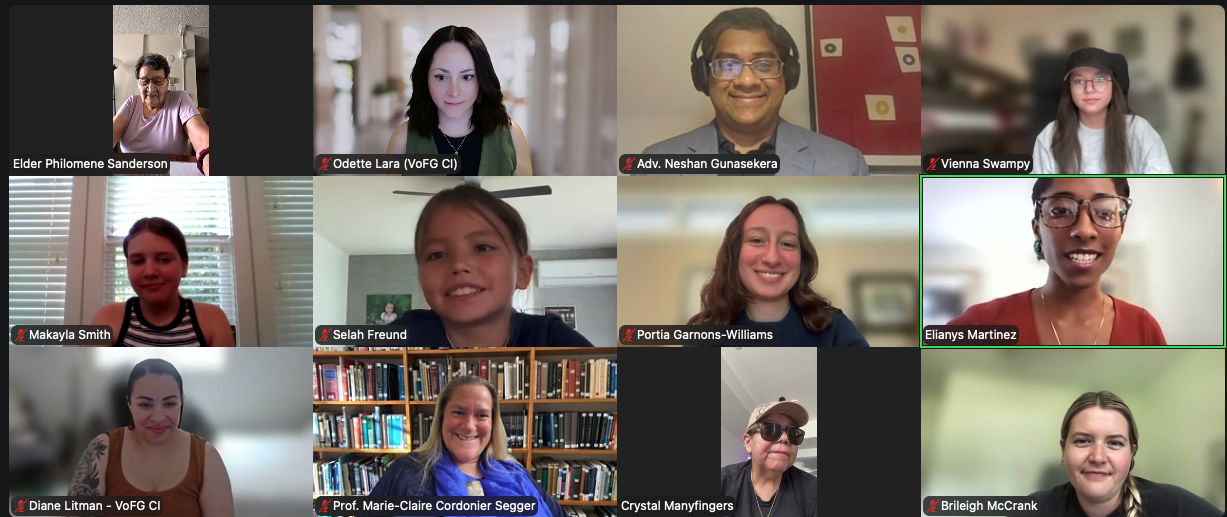
On Saturday, July 25, 2026, the Voices of Future Generations Children's Initiative (VoFG CI) welcomed participants from across Canada and around the world for its annual Online Roundtable on Indigenous Children's Voices & Rights. Held in advance of the International Day of the World's Indigenous Peoples, the event celebrated the creativity, leadership, and lived experiences of Indigenous children and youth while exploring the vital role of storytelling in advancing children's rights, reconciliation, and sustainable development.
The event began with opening remarks from Diane Littman, Indigenous Educator Consultant with VoFG CI, who welcomed participants to an afternoon dedicated to listening to Indigenous children and youth and amplifying their voices. Elder Philomene Sanderson (Plains Cree, Moosomin First Nation, Treaty 6), an Indigenous Day School Survivor and Sixties Scoop mother, opened and later closed the gathering with prayer, reminding participants of the importance of honouring Indigenous knowledge, culture, and community.
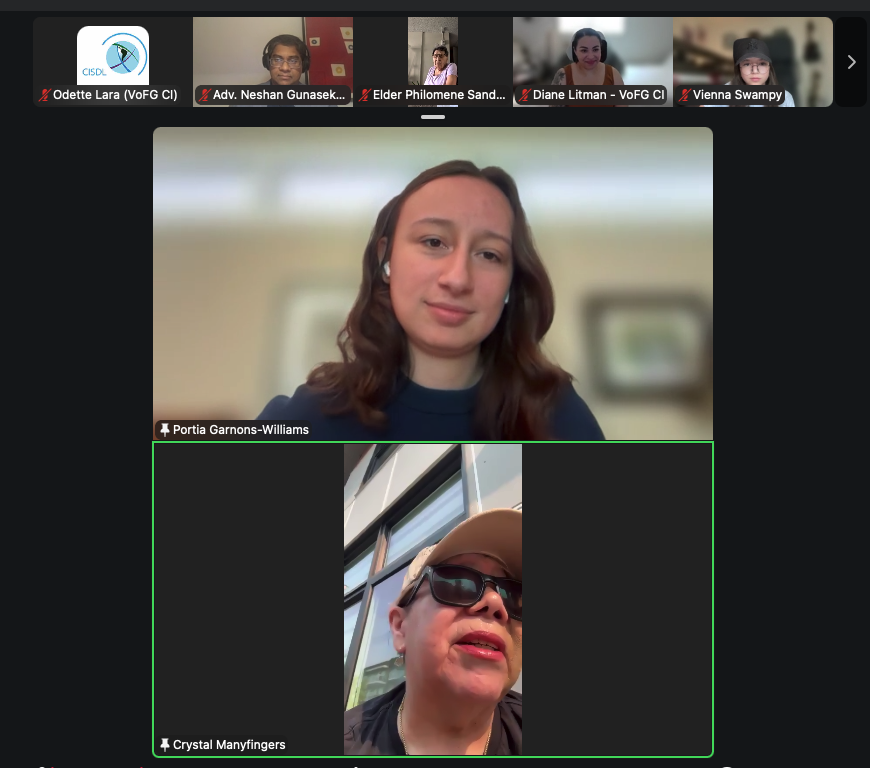
A highlight of the event was the interactive keynote conversation featuring Crystal Manyfingers, Blackfoot author, educator, and curriculum developer, moderated by Portia Garnons-Williams, Indigenous youth advocate and member of VoFG CI's Indigenous Leadership Council.
Drawing from her own experiences as an educator, author, and lifelong advocate for Indigenous language revitalization, Crystal emphasized the importance of listening to Indigenous children and valuing their voices. She reflected on how storytelling helps preserve language, culture, and traditional teachings while strengthening connections between generations. She encouraged young writers to continue sharing their stories, learn from Elders and Knowledge Keepers, and embrace their role as the next generation of cultural leaders.
Crystal also spoke about the importance of protecting Indigenous languages, sharing stories rooted in traditional values, and recognizing that all living beings are connected through "all our relations." She reminded participants that stories are powerful tools for resilience and healing and encouraged young authors to persevere despite challenges, never giving up on sharing their voices.
The celebration also marked the launch of three new publications by young Indigenous authors.
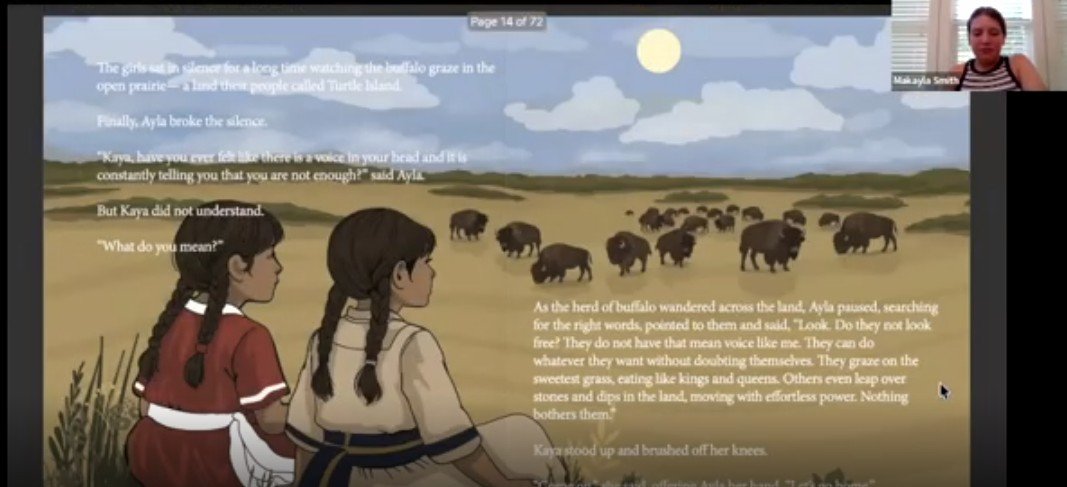
Makayla Smith, VoFG CI Indigenous Child Author 2026, introduced Running Free, explaining that the story was inspired by her own experiences with self-confidence and belonging. She shared her hope that the book will remind children that they are never alone and encourage those struggling with confidence or friendship to believe in themselves.
Vienna Swampy, VoFG CI Indigenous Child Author 2025, launched her second book, The Forest of Friendship. Building on the themes introduced in The Land Before Us, Vienna's newest story explores food insecurity, community, kindness, and the importance of speaking up when we see injustice. Inspired by the school breakfast and lunch program in her community, she shared her hope that the story encourages readers to recognize that even small acts of kindness can create meaningful change.

Participants also celebrated the launch of Voices of Turtle Island: Stories by Young Indigenous Authors, the Initiative's first anthology featuring award-winning stories from Indigenous youth across Canada. The anthology showcases the remarkable creativity, resilience, and perspectives of young Indigenous storytellers while highlighting the importance of preserving culture, language, and history through storytelling.
The afternoon continued with an engaging roundtable discussion co-chaired by Prof. Marie-Claire Cordonier Seggerand Adv. Neshan Gunasekera, featuring Indigenous child authors, youth ambassadors, and educator Alyssa Johnson.
The discussion explored how identity shapes storytelling, the role of stories in truth and healing, and how communities can better support Indigenous children and youth.
The discussion explored how identity shapes storytelling, the role of stories in truth and healing, and how communities can better support Indigenous children and youth.
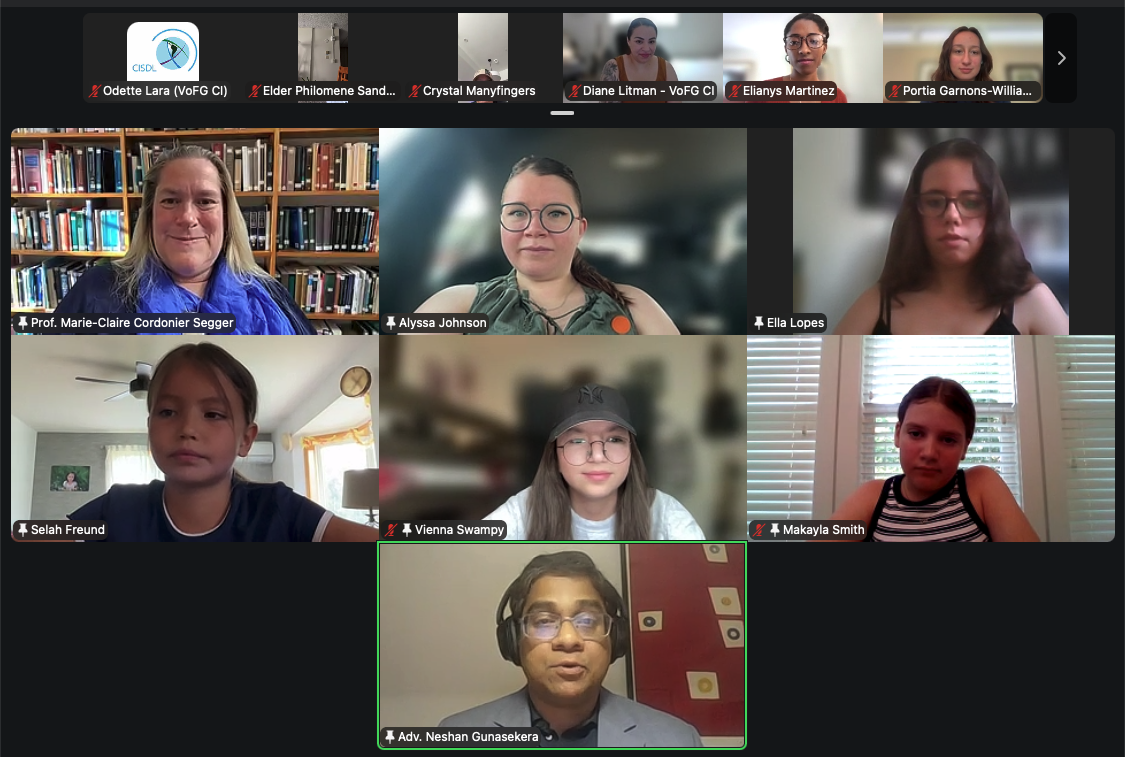
The young authors reflected on how their writing is deeply rooted in their lived experiences, families, and communities. Ella Lopes shared that reconnecting with her Indigenous identity has shaped the stories she tells, while Vienna Swampy spoke about drawing inspiration from her community and the importance of seeing Indigenous youth represented in literature. Together, they emphasized that authentic storytelling not only preserves culture and strengthens identity but also helps other young people see themselves reflected in books.
Educator Alyssa Johnson highlighted the impact Indigenous literature has in classrooms, explaining that stories written by Indigenous authors help both Indigenous and non-Indigenous students build empathy, recognize shared experiences, and better understand one another. She encouraged young people to continue expressing themselves creatively, noting that children's voices have the power to inspire meaningful change.
The conversation concluded with a hopeful vision for stronger communities. Makayla Smith called for more opportunities that help children build confidence, form friendships, and connect beyond social media, while speakers agreed that creating spaces where young people can share their stories, ideas, and creativity is essential to building understanding, belonging, and a brighter future.
A moving highlight of the event was a spoken-word performance by Ella Lopes, who presented her original poem, Not Another Acronym. The performance called attention to the lived realities faced by many Indigenous peoples while powerfully affirming the importance of protecting Indigenous lives, listening to Indigenous youth, and moving beyond statistics toward meaningful action and reconciliation.
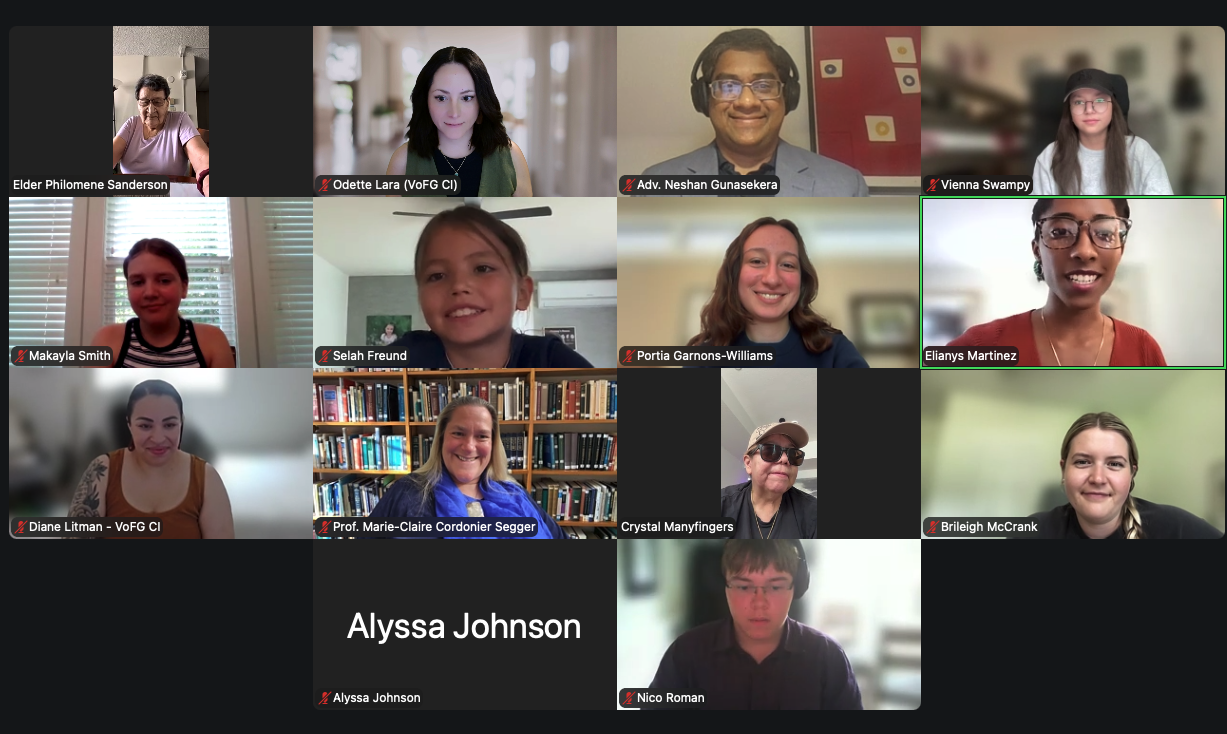
The event concluded with closing remarks from Adv. Wayne Garnons-Williams, CEO of the National Sixties Scoop Healing Foundation of Canada. He reflected on the Foundation's ongoing partnership with VoFG CI, highlighting how the annual storytelling initiative empowers Indigenous children to share their histories, cultures, and lived experiences while advancing healing, education, and reconciliation. He also announced the Foundation's continued support for the program through the 2026–2027 grant year, reaffirming its commitment to uplifting Indigenous youth through storytelling.
VoFG CI extends its sincere gratitude to Elder Philomene Sanderson, Crystal Manyfingers, the National Sixties Scoop Healing Foundation of Canada, the Centre for International Sustainable Development Law, all moderators, speakers, partners, and especially the remarkable Indigenous children and youth whose courage, creativity, and leadership made this year's roundtable such a meaningful success.
Together, their stories reminded everyone that Indigenous children are not only the voices of the future—they are powerful leaders, storytellers, and changemakers today.
You can watch the recording of the event below.
*Funding from this program is through a generous Gift from The National Sixties Scoop Healing Foundation of Canada