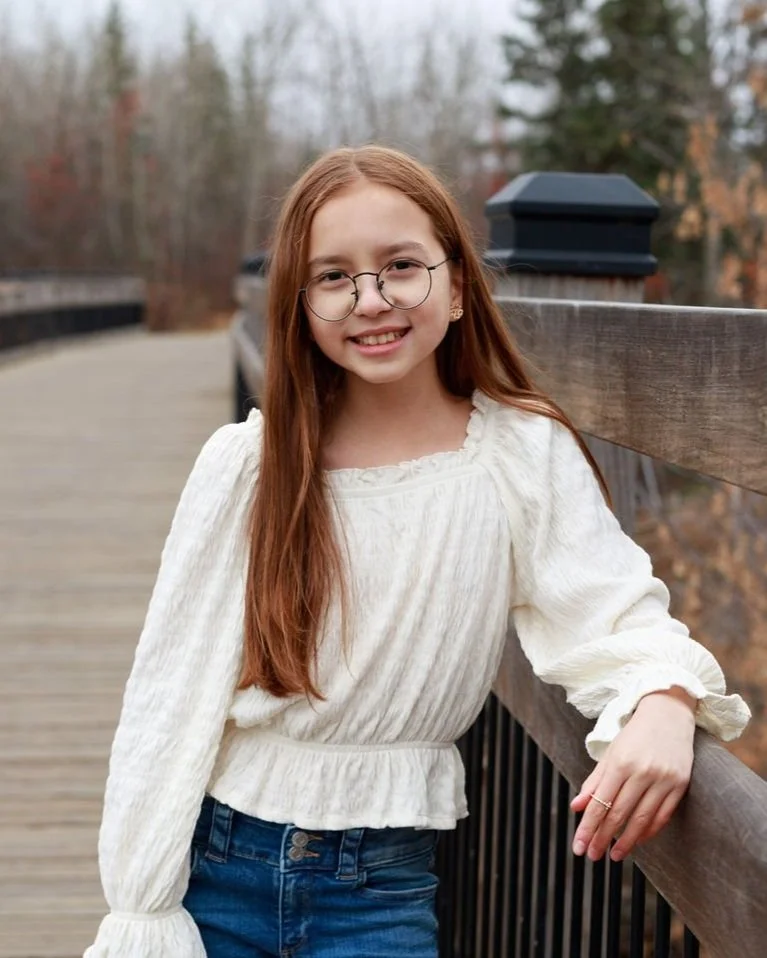
Listening to Each Other and the Land: Vienna’s Reflections on Indigenous Perspectives, Sustainability, and Children’s Rights

Child Author Vienna Swampy shared an inspiring reflection on the importance of listening, human connection, and Indigenous perspectives in building a more sustainable and compassionate future.

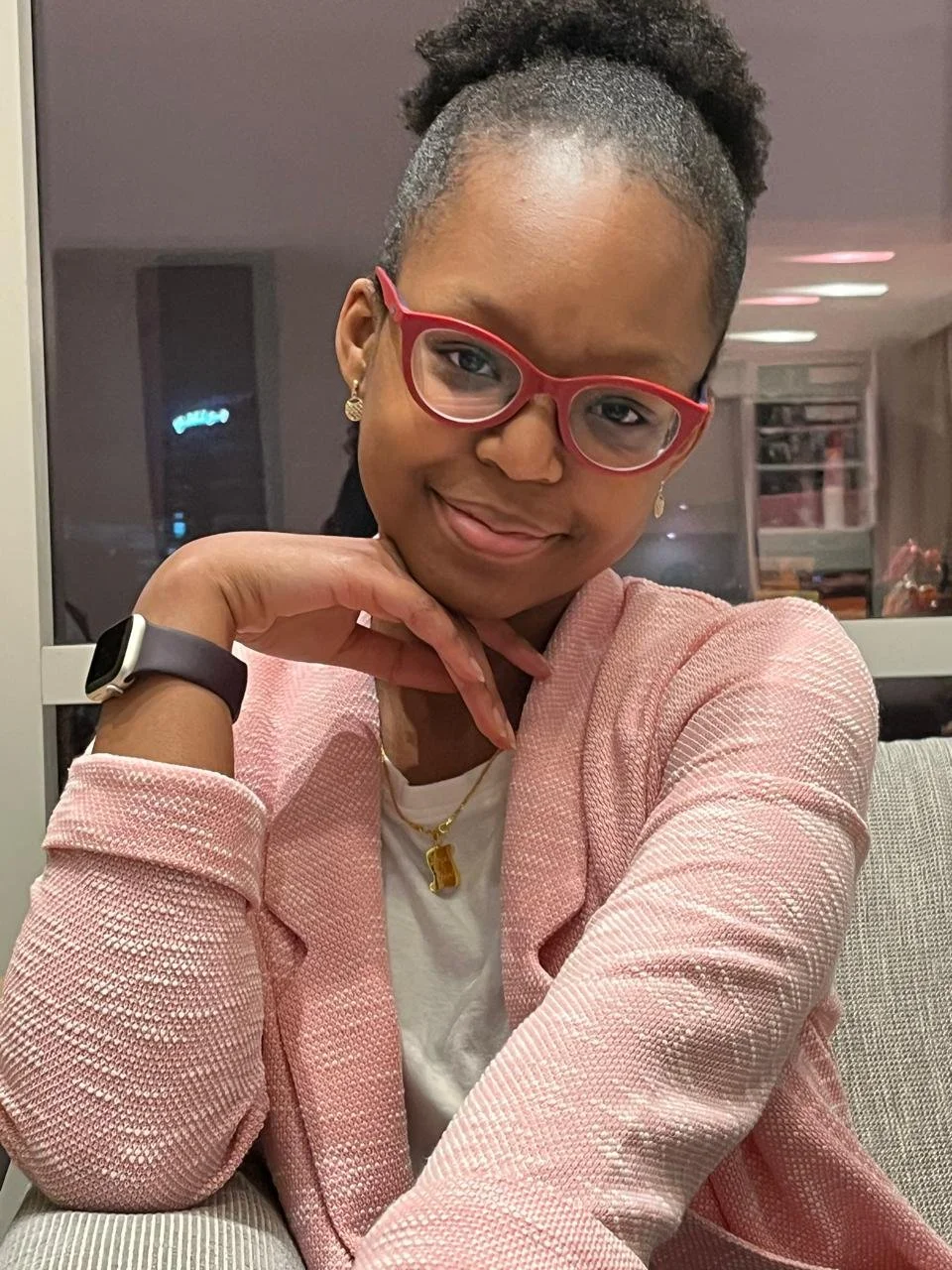
Vienna, from Samson Cree Nation in Alberta, is the Gold Winner of the 2025 Indigenous Story Contest and a passionate advocate for her Cree culture and community. She loves writing, competitive running, learning her language, and supporting Indigenous traditions and ways of knowing. Through her remarks, Vienna highlights how listening to one another, to children, and to the land can guide meaningful learning and positive change in a rapidly evolving world.

A central theme in Vienna’s message is the importance of human connection. While acknowledging the growing role of artificial intelligence in society, she reminds us that AI should never replace relationships, empathy, and the wisdom that comes from listening to real people and communities. Instead of depending entirely on technology for understanding, Vienna encourages people to learn directly from one another and from advocates working to protect children’s rights and community well-being.

Vienna also speaks about the need to listen carefully to the causes of violence and injustice while being willing to take action to address them. Her reflections highlight that meaningful learning is not only about gaining information, but also about understanding responsibility, compassion, and collective action.

Another powerful aspect of Vienna’s message is her connection to the land. She explains that sustainability begins by listening to what the land needs from us and by working together to protect the environment for future generations. Indigenous perspectives, grounded in respect for nature and community responsibility, offer valuable lessons for addressing ecological degradation and building stronger, healthier communities.

Through listening, cooperation, and respect, Vienna believes communities can create safer environments for children, protect natural resources, and strengthen cultural identity and well-being. Her reflections remind us that meaningful change often begins with simple but powerful actions: listening, learning, and caring for one another and the world around us.

Vienna’s message serves as an important reminder that Indigenous perspectives provide valuable guidance for advancing sustainability, children’s rights, and meaningful education in today’s complex world. By centering relationships, respect, and shared responsibility, young people like Vienna are helping inspire a more connected and hopeful future.

Watch the video below to hear Vienna’s full reflections on Indigenous perspectives, listening, sustainability, children’s rights, and the importance of human connection in the age of AI and global challenges.

Learning Through Relationships: Indigenous Perspectives on Sustainability, AI, and Children’s Rights - Sydney Wynter Nisyok

Young Indigenous Author Sydnee Wynter Nisyok shared a powerful reflection on the importance of Indigenous knowledge systems in shaping a more sustainable, balanced, and inclusive future.

Sydnee, a Child Author with the Voices of Future Generations Children’s Initiative (VoFG CI), belongs to the Nisga’a and Haisla Nations and is passionate about advocating for Indigenous rights, children’s rights, and meaningful learning. In her remarks, she emphasizes that Indigenous perspectives are deeply rooted in relationships, intergenerational knowledge, and respect for the land and community.

Introducing herself through her family, house, and community connections, Sydnee explains that Indigenous ways of knowing have been passed down through generations by ancestors, families, and communities. Learning, she says, happens through relationships — with people, culture, and the natural world. These teachings encourage balance in life by ensuring equality, sustainability, and strong community connections where no one is left behind.

A central theme in Sydnee’s reflections is the importance of sustainability. She explains that Indigenous communities have long relied on respectful relationships with the land and natural resources to sustain their way of life, even while facing ongoing challenges caused by colonization and the degradation of lands, resources, and traditional systems. Despite these difficulties, Indigenous peoples continue to uphold their knowledge systems and perspectives, offering important lessons for addressing today’s global challenges.

Sydnee also raises important concerns about the rapid advancement of artificial intelligence and technology. While acknowledging that AI can create many improvements, she highlights the uncertainty surrounding its long-term impacts on relationships, learning, culture, and sustainability. She asks thoughtful questions about how technology may affect family and community connections, the educational experiences of children, and even our relationships with the land.

Another key issue Sydnee addresses is the exclusion of children and Indigenous peoples from important conversations and decision-making processes. Too often, she explains, communities receive little information until major decisions have already been made. This approach, she argues, is not sustainable and does not reflect Indigenous ways of learning and governance, which are based on communication, shared knowledge, and meaningful relationships.

Sydnee also speaks about the risks of misinformation in an age increasingly shaped by AI-generated content. As technology becomes more advanced, maintaining authentic human connections and real-life conversations becomes even more important. She encourages people to continue sharing knowledge directly, taking the time to listen to one another, and creating spaces where everyone can contribute to meaningful and lasting change.

Through her reflections, Sydnee reminds us that Indigenous perspectives provide valuable guidance for addressing some of the most pressing issues facing the world today — from ecological degradation and social inequality to the ethical challenges of artificial intelligence. Her message highlights the importance of centering relationships, respect, collaboration, and community as we work toward a more sustainable and equitable future.

Watch the video below to hear Sydnee’s full reflections on Indigenous perspectives, sustainability, meaningful learning, and the challenges and opportunities created by artificial intelligence and technological change.

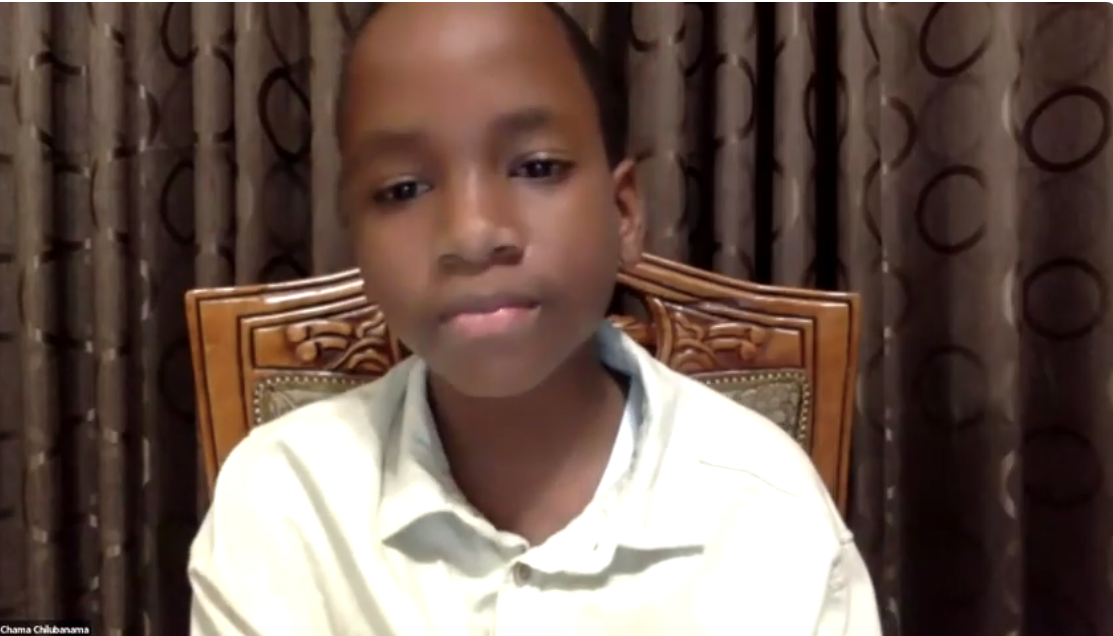
Protecting Children’s Rights Today to Build a Better Future Tomorrow - Chama Chilubanama

Child Ambassador Chama Chilubanama from Zambia shared a thoughtful and inspiring message about the importance of protecting children’s rights both now and for future generations.

At just 9 years old, Chama already demonstrates a strong commitment to community action, sustainability, and children’s well-being. A young author and active participant in science fairs, he is passionate about recycling, sanitation, and finding practical solutions to everyday challenges in his community. Through his remarks, Chama reminds us that children are not only the future — they are active participants in shaping the world today.

In his message, Chama highlights the importance of improving children’s everyday experiences through access to education, healthcare, and stronger systems of child protection. He emphasizes that all children deserve safe environments where they can learn, grow, and play freely. By creating safe recreational spaces such as parks and playgrounds, communities can help protect children from unsafe situations and support their healthy development.

Chama also points to the importance of the United Nations Convention on the Rights of the Child as a guide for safeguarding children’s futures. He reminds us that children are individuals with their own voices, opinions, and perspectives that deserve respect. Although children may be young, their ideas and experiences matter and should be included in conversations and decisions that affect their lives.

A central message in Chama’s remarks is empowerment. Protecting children’s rights is not only about providing safety and support — it is also about giving young people opportunities to participate, contribute, and prepare for the future. When children are encouraged to share their ideas and become involved in community issues, they develop confidence, leadership, and the skills needed to help create positive change.

Chama’s reflections serve as an important reminder that protecting children’s rights requires action from families, schools, communities, and governments alike. By investing in children’s well-being today and listening to their voices, we can help build a more inclusive, compassionate, and sustainable future for everyone.

Watch the video below to hear Chama’s full reflections on children’s rights, empowerment, and how we can work together to create a safer and brighter future for children around the world.

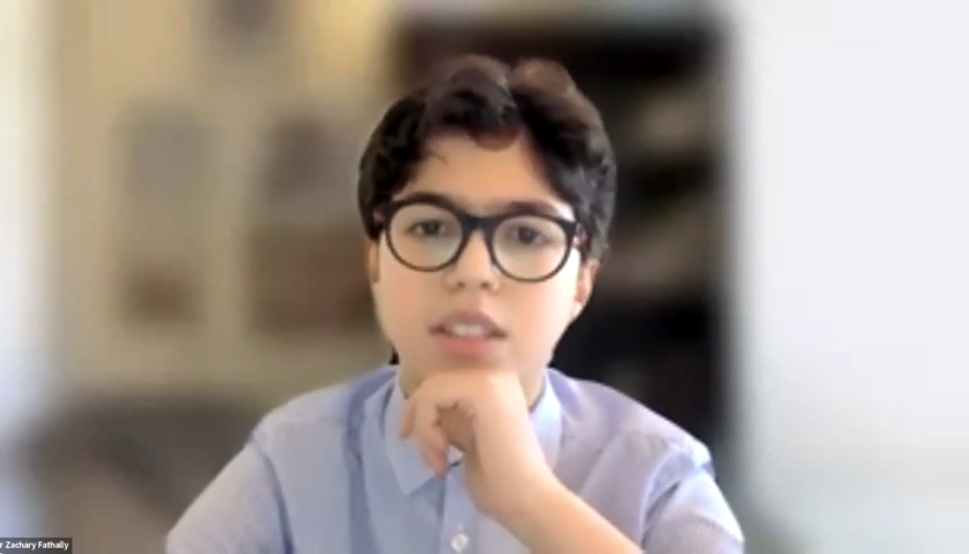
Climate Change, AI, and the Future: A Young Advocate’s Perspective - Zachary Fathally

Zachary’s remarks offer a powerful reminder that young people are not only aware of the challenges facing the world today — they are ready to be part of the solutions. At just 12 years old, Zachary speaks with clarity, compassion, and urgency about the issues many children are thinking about every day: climate change, online safety, artificial intelligence, and the future of our planet.

As a Child Ambassador for the SDGs and a member of Children First Canada’s Youth Advisory Council, Zachary emphasizes that children are deeply concerned about inheriting a world facing environmental instability, economic uncertainty, and rapidly evolving technologies. His message highlights a growing reality: youth are paying close attention to the decisions adults make today, and they want to be included in shaping the future.

One of the strongest themes in Zachary’s remarks is the importance of partnership between adults and youth. Rather than simply speaking on behalf of children, he calls for adults to actively listen to young people, involve them in decision-making processes, and provide them with the tools and support necessary to lead initiatives in their communities. Whether through youth councils, awareness campaigns, school clubs, or participation in policy discussions, Zachary reminds us that meaningful youth engagement begins by giving young people a genuine seat at the table.

Climate change remains one of the greatest concerns raised by youth worldwide. Zachary speaks candidly about the anxiety many children feel regarding environmental degradation and the slow pace of global action. He highlights how even everyday issues, such as water scarcity, demonstrate the urgent need for responsible environmental stewardship. His reflections show how young people understand that sustainability is not a distant issue, but something that already affects their lives and futures.

At the same time, Zachary raises concerns about the growing influence of technology and artificial intelligence. While recognizing the potential benefits of AI, he also points to the challenges children face in navigating misinformation, distinguishing between real and AI-generated content, and staying safe online. These concerns reflect the experiences of an entire generation growing up in an increasingly digital world.

Importantly, Zachary’s message is not one of hopelessness. Instead, it is a call for collaboration, responsibility, and action. He reminds us that small actions taken today can create meaningful change in the future, and that supporting youth-led initiatives can help build stronger, more inclusive, and more sustainable communities.

Zachary’s remarks reinforce the importance of education not only as a tool for learning, but also as a foundation for participation, empowerment, and global citizenship. By listening to young voices and supporting youth leadership, we can help create a future where children are not simply preparing to inherit the world, but actively helping to shape it today.

Watch the video below to hear Zachary’s full reflections on climate change, online safety, artificial intelligence, and the importance of including youth voices in shaping a better future for all.

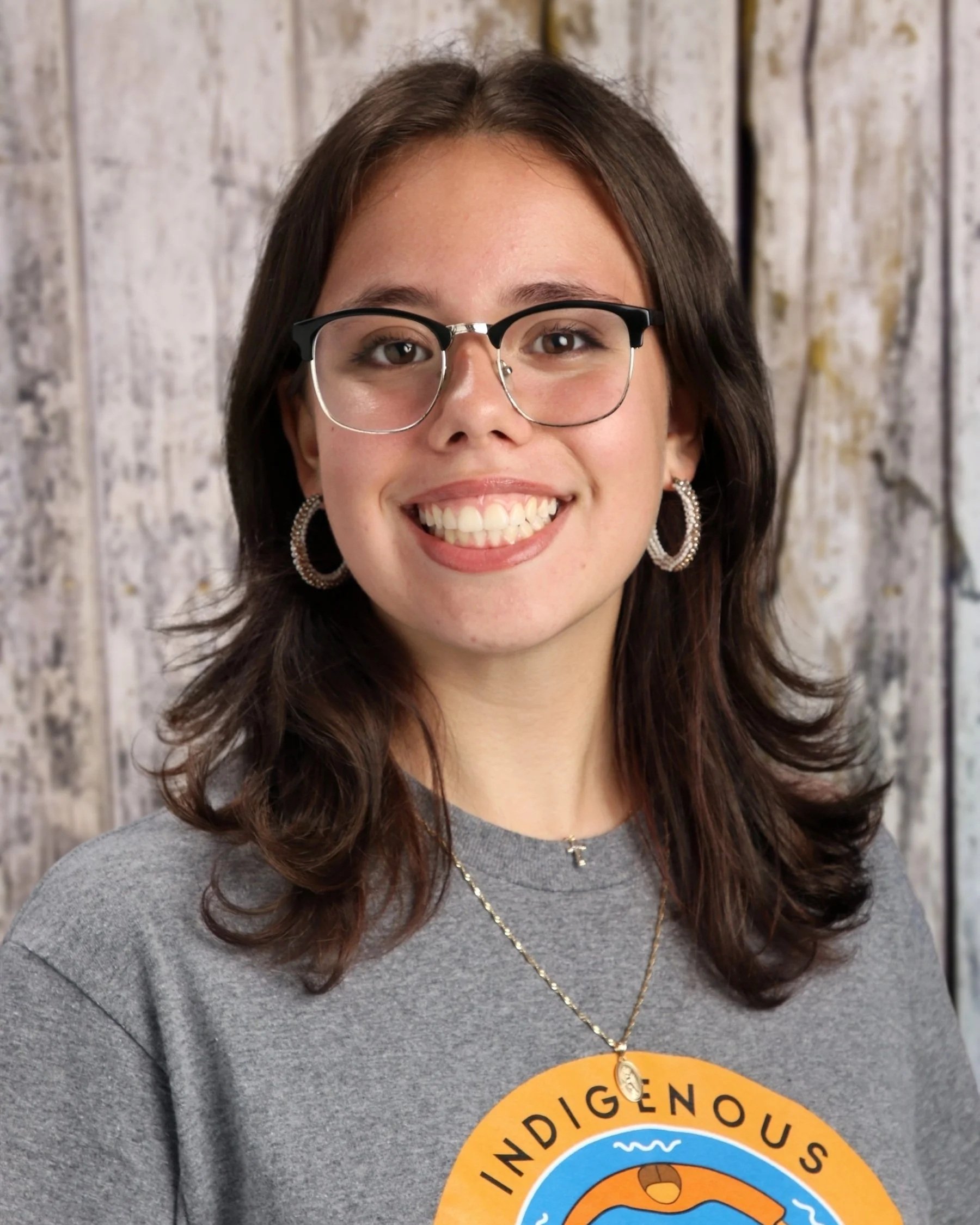
Not Another Acronym:  A Poem by Ella Lopes

Ella Lopes, Indigenous Child Ambassador from Algonquins of Pikwakanagan First Nation.


At just sixteen years old, Ella is already using her voice to create space, demand safety, and honour the stories carried by her people. A Grade 11 student at Notre Dame High School in Ottawa, Ontario, Ella is half Algonquin and half Portuguese, and a proud member of the Algonquins of Pikwakanagan First Nation. As an Indigenous Ambassador for Voices of Future Generations and a lifelong creative writer, she has dedicated much of her work to exploring Indigenous identity, truth, and resilience.

Awarded Silver in this year’s writing contest, Ella’s powerful poem refuses silence. With unflinching honesty, she speaks to the lived realities and fears that many Indigenous women and girls carry — while fiercely asserting presence, strength, and survival. Her words echo the urgent call behind the red dresses that “swing in the evening wind,” symbols of lives stolen and voices that must never be forgotten.

Through rhythm and repetition, she transforms fear into declaration: “Say my name, I am around.” It is both a reminder and a promise; that Indigenous youth are here, creating, leading, and shaping the future with courage.

We are honoured to share Ella’s poem below.


Not Another Acronym

by Ella Lopes

Radio hums like a sad old prayer
Mom says text me when you’re there
I lace my boots, I check the lock
I learn my fear before I walk

Neon signs and pavement skin
Every shadow feels like sin
I hold my breath, I count my steps
Like safety’s something I could’ve kept

They taught me how to look away
How not to take up space
But I’m tired of shrinking down
Just to make it home okay


I don’t wanna be another name
Sung too late in candle flame
Don’t wanna fade, don’t wanna fall
Don’t wanna be a ghost at all

Say it now, say it loud
Say my name while I’m around
I don’t wanna be remembered
I wanna be protected


Red dresses swing in the evening wind
Like they’re still trying to breathe again
Every one a stolen song
Every one says something’s wrong

They file us away, they talk real slow
Like grief’s a show they already know
They nod their heads, they make it neat
While we bleed truth into the street

I carry stories in my spine
Older than this stolen time
I shouldn’t fear the simple act
Of coming home alive


See me now, I’m standing here
Not a warning, not your fear
I’m a heartbeat, I’m a song
I was never meant to be gone

I don’t wanna be a statistic
A quiet loss they call realistic
I don’t wanna be an abbreviation
Or another loss to my nation

Not another lost creation

Or a meaningless documentation

I don’t want to be another example of colonization

Or another step back in reconciliation

Not another starved of graduation

Or just another red declaration

Radio plays, I’m still here
Still singing through the fear
Still breathing, still loud
Say my name, I am around

The Issues Shaping Our Generation: A Youth Perspective - Zachary Fathally

What are the biggest concerns facing children today, and how can adults truly support youth-led movements and initiatives?

These were the questions explored at the recent International Roundtable for Children’s Rights and Education hosted by Voices of Future Generations. Among the young speakers was Zachary, a 12-year-old from Ottawa, Canada, who is passionate about advancing children’s rights and raising public awareness about climate change.

Zachary strongly believes in amplifying children’s voices and ensuring young people are meaningfully included in conversations that shape their future. At just 10 years old, he became a Child Ambassador for the United Nations Sustainable Development Goals (SDG) – Voices of Future Generations, a worldwide initiative supported by UNESCO, after winning a silver medal for his story on children’s rights, Reda’s Little Village. As a Child Ambassador and a member of Children First Canada’s Youth Advisory Council, he has participated in national roundtables, met with senators and Members of Parliament, and spoken at a press conference on Parliament Hill to advocate for issues affecting children and youth.

In the article below, Zachary shares his perspective on the urgent issues affecting children today—and explains why giving youth a real seat at the table is more important than ever.


Children’s Present Struggles, Tomorrow’s Heavy Burdens

by Zachary Fathally

Climate change and protecting children from online harm are, in my opinion, the two main concerns of children today. We, as young people, are worried that by the time we become adults, the planet and the economy will be too messed up to fix. We need adults to be more responsible with climate change, the economy, and the well-being of children. We need adults to let youth speak up and actually listen to their concerns. In fact, adults can best help by letting children be their partners and allowing them to participate in the making of some big decisions. We need them so they can help us get legal tools and funding for our projects (clubs, awareness campaigns, etc.).

In fact, children today face multiple challenges, but if I had to choose the two main concerns, they would be climate change and everything that pertains to AI, technological change, and, ultimately, online safety.


Climate change and protecting the environment:

Let’s be honest: a lot of young people today are very anxious about the state of our planet. I fear the long-term effects of environmental damage and feel frustrated by the slow action of governments and institutions. We will be the ones to deal with what adults have failed to do, and the burden will be very heavy on us. I don’t know if you’ve heard this adage, but it says that small actions every day make a big difference in the long run. It is better to act now than to let problems accumulate and try to fix everything later. This is a quote I have seen many times on social media: “When small is big.”

Recently, I read a short article about water scarcity. It is mind-boggling to realize that water is not infinitely renewable, so we must take care of what we have and use water responsibly. Water is only one aspect of climate change, but it is extremely important because it is the source of life on Earth.

So, how can adults support youth-led initiatives? It is actually very simple: by giving young people a seat at the table.
— Zachary Fathally

Online safety:

The second concern affecting children is online safety, as AI is becoming increasingly popular. In fact, AI has become so common that I sometimes find myself watching a video and questioning whether AI created it. This is worrying. Children may not be able to differentiate between what is real and what is fake. Also, online harm is something many children experience alone. Today’s children are much more comfortable with technology than any previous generation, and this constant use of technology can have serious effects on them. These issues are being addressed to protect children. For example, we have seen legislation in Australia that bans social media for children. Moreover, social media and social gaming can be very addictive and have serious repercussions on young people's mental health. If we take care of our mental health, we will create a safer society for all.

So, how can adults support youth-led initiatives? It is actually very simple: by giving young people a seat at the table. Adults can invite youth to participate in parliamentary committees, speak up, and allow them to express their concerns in formal and informal meetings about children’s issues. There are also many youth advisory councils on various issues where young people can share their thoughts and ideas.


Zachary is a 12-year-old from Ottawa, Ontario. He is an avid reader who seizes every opportunity to learn about history, geography, and science. Zachary is passionate about advocating for children’s rights and raising public awareness about climate change. He is a VoFG Child Ambassador for the SDGs and a member of Children First Canada’s Youth Advisory Council. In his free time, he enjoys playing the piano, swimming, cycling, and reading. He is also a member of a regional football soccer team.

Speaking Up for the Planet -A Young Voice on Climate Change - Emma Yu

by Emma Yu, VoFG CI Child Ambassador for the SDGs

Climate change is one of the most important issues facing our world today, affecting people, animals, and ecosystems across the globe. In this essay, Emma, an 11-year-old student living in California, explores why climate change matters and why it is important for everyone to take action. As a Youth Ambassador for the past two years, Emma has worked to promote the United Nations’ Sustainable Development Goals and is passionate about making a positive difference in her community and beyond. Drawing on her interests in sustainable development and global citizenship, she shares her ideas and hopes for a more sustainable future.


Global Climate Change

You are at the beach on a hot summer day. This summer is hotter than summers in the past. It is so hot that you are forced to stay under a beach umbrella. Then, you remember your trip to Disney World last year. You remember hearing the loudspeakers at Disney World say, “The park is closing due to a hurricane. Please leave the park immediately.” You might think, “What is causing this?” Global climate change is responsible. The main contributing factors to global climate change are greenhouse gases (carbon dioxide and methane) and deforestation. These are all products of human activity.


Greenhouse Gases: Out of Balance

For thousands of years, the Earth had a good balance of greenhouse gases. The most important greenhouse gases are carbon dioxide (CO₂), methane (CH₄), and nitrous oxide (N₂O). However, humans have used fossil fuels such as coal, oil, and gas and have expanded dairy and cattle farming. As a result, this balance has been disrupted. Consequently, there is 30% more carbon dioxide in the atmosphere than there was 150 years ago.

In the past, we had a healthy atmosphere because animals absorbed oxygen and released carbon dioxide. This was balanced by plants, which absorb carbon dioxide and release oxygen in a process called photosynthesis. When we burn fossil fuels, we also release carbon dioxide. Therefore, when you are driving a gas-powered car, flying in a plane, or heating your house, you are releasing carbon dioxide into the atmosphere. Additionally, not recycling properly can add greenhouse gases to the atmosphere. Plastic water bottles can release carbon dioxide and methane if they are not recycled properly. This is yet another reason to use sustainable products and recycle properly.

Many people might find this strange, but cheeseburgers also impact global climate change. Cheeseburgers, or any kind of beef, contribute to global warming because beef comes from cows. When cows and other farm animals digest their food, they release gas through burping and passing gas. This gas is methane (CH₄), a greenhouse gas. Americans alone eat an average of 50 billion cheeseburgers a year. That is not only a lot of cheeseburgers, but also a lot of cows. Dairy cows also produce methane. There are about 9 million dairy cows and about 33 million beef cattle slaughtered each year. Each of these cows produces approximately 220 pounds of methane per year.


Deforestation

Deforestation is also a contributor to global climate change. Trees are a very important part of the carbon cycle. They help balance carbon dioxide and oxygen, and they help build carbon back into the soil. Deforestation occurs when forests are cut down to make way for housing or agriculture.

Furthermore, 80% of the world’s animal species can be found in tropical rainforests. Deforestation not only causes global warming but also threatens extinction. In addition, tree roots help prevent erosion and landslides. Civilization could be severely impacted due to excessive deforestation. Over time, the world has lost roughly 30 million acres of trees due to deforestation, which is roughly the size of New York State. When trees are cut down, they also release some of the carbon dioxide they are storing. Sometimes, wildfires—often the result of human activity—can cause deforestation. Farmers also contribute to deforestation when they clear trees to make room for crops and cattle.


Conclusion

Ultimately, greenhouse gases are causing the Earth to warm. The effects include more extreme weather and heat, which can displace both animals and people. After reading this, hopefully you can contribute to helping stop global climate change. A few ways to help include carpooling to school, riding in an electric-powered car, or eating less meat. These are only a small portion of the many ways people can help stop global climate change.


Emma Yu

VoFG Child Ambassador for the SDGs

Emma Yu is a thoughtful and compassionate girl from California, USA, whose passion for philanthropy and social justice shines through in everything she does. She cares deeply about global issues such as poverty eradication, gender equality, access to quality education, peacebuilding, and protecting our planet. Emma believes that even the smallest actions, especially those taken by children, can make a meaningful difference in the world.


Bibliography

Bow, James. Earth’s Climate Change Carbon Dioxide Overload. New York, New York:

Crabtree Publishing Company, 2016. Print.

Buchanan, Shelly. Global Warming. Huntington Beach: Teacher Created Materials,

2016. Print.

Roberts, Jack and Owens, Michael. A Kid’s Guide to Climate Change and Global

Warming. Palm Springs: Curious Kids Press, 2019. Print.

Simon, Seymour. Global Warming. New York, New York: Harper, 2010. Print.


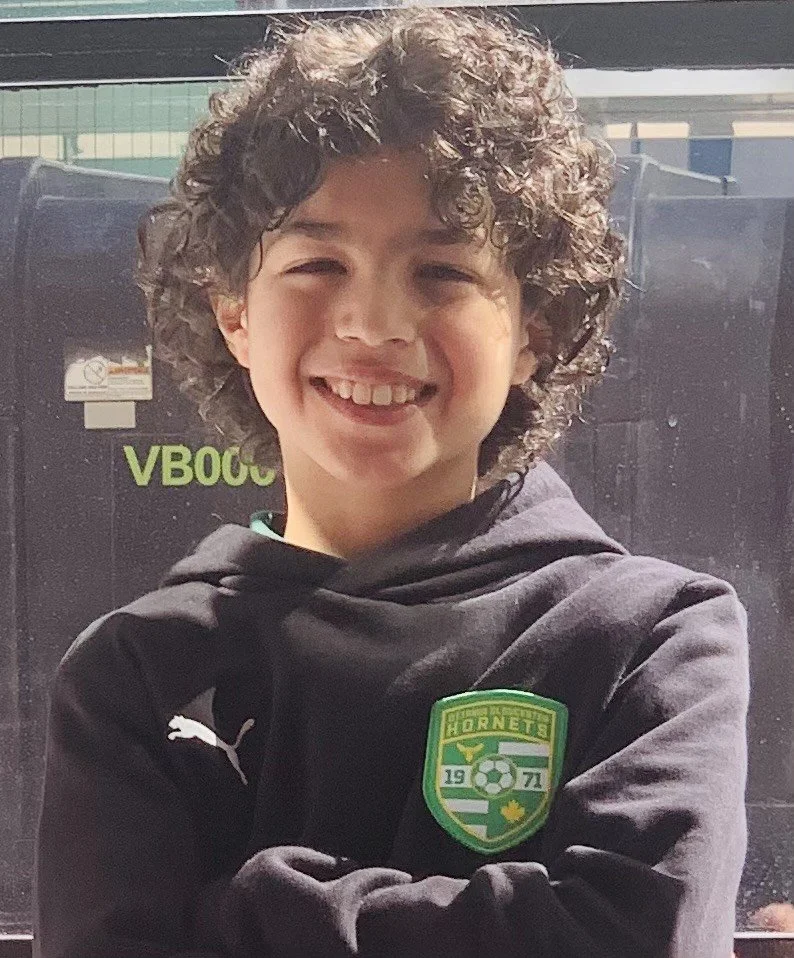
1,000km Challenge for our Global Youth Council - Nico Roman

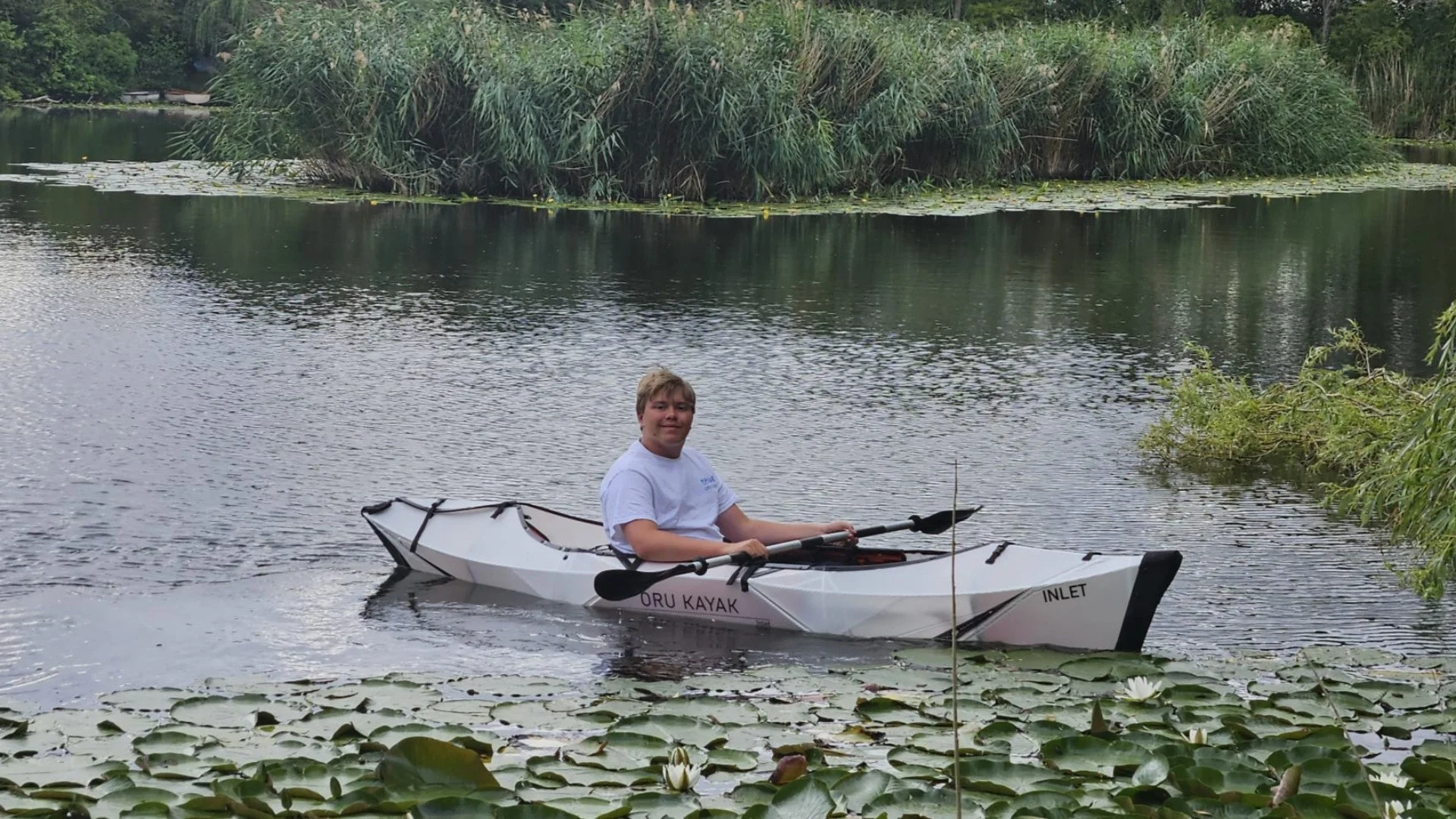
👋 This August, I’m kayaking 100km down the River Nene to raise funds for youth-led sustainability and nature protection 🌿🌍

It’s part of a 1,000km Challenge for our Global Youth Council — and all donations go to support youth education, empowerment and conservation science charities.

If you can, I’d really appreciate your support! 🙏

<<Click here for the link>> Thanks so much! 💚 – Nico

Drainage, Resistance and Rewilding Movements in the East Anglia Fenland: A history presentation by Nico Roman

Watch Nico's short history presentation on drainage, resistance and rewilding movements in the East Anglia fenland, UK.

This brief Massolit-style presentation focuses on the fascinating economic, natural and political history of the Fenlands in East Anglia. It is a story of resistance to the destruction of wetlands and livelihoods, from Hereward the Wake of 1060 to the Isle of Axholme Mowbray Accord of 1305 to the Powtes Complaynte of 1611, the Bedford Level Corporation of 1663, the Enclosure Act of 1795, and the steam-powered drainages of the 1800s and 1900s, to the floods, erosion and siltation of the 2000s.

Anisa on Children´s Right to a Healthy Environment

Picture this, for a minute. You step outside of your house and there are trees again. Real ones, that live and breathe. You trade oxygen and carbon dioxide with them—an age old bartering system. They are not obstructed or uprooted by the concrete, and blessedly, neither are you. The air you breathe is unclogged, free of the countless pollutants human kind has invented. In this world, factories do not expel the kind of waste that makes you sick. In this world, humans do not burn in order to build. At night-time, you can see the stars, and learn the constellations your ancestors knew. The sky is as clear as your lungs. 

In this world, we do not kill the creatures of the earth with our plastic, or with our toxins, or with our greed. Our water is clean and clear and accessible, and we do not take from the earth without replenishing.

In this world, landfills have been leveled, and the clock of climate change has been reset. Disease and death as a result of bad practice are circumvented and avoided as a result of good practice. In this world, chemicals do not kill us, or change our lives irreversibly. We do not dare to ravage our planet. We take care of the earth, and she rewards us.

The world I am describing is one every child has a right to. A world that is safe. A world that is healthy. A world that allows every person alive to experience their lives uninterrupted. A healthy environment shouldn’t feel like a pipe dream. That is what the right to a healthy environment means to me. The right to experience the world without suffocating it, and experiencing suffocation in turn.

The truth is, we only destroy our planet because we don’t realize what we’ve already lost. The sky. The stars at night. The seasons as we knew them. Clean air. Clean water. Sound agriculture. The right to the organic in a world of the artificial. Almost 1,000 animal species in around 500 years, and a projected million more plants and animal species in the next thirty years. Unhealthy environments steal slowly, but shouldn’t each and every one of us have a right to recover ground?


Because here's the thing: the conversation surrounding sustainability and ecoconsciousness and whether or not it’s possible to cure our planet of its ills is not solely an adult conversation. Children have their seats at the table. At the very least, they deserve to. I’ve seen kids of almost every age propose powerful and pertinent solutions. I’ve seen kids speaking about littering and recycling and the demerits of single use plastic. As a young person, I theorize that the biggest thing we can do to make a difference is get the world to listen. Children have always been directly affected by the consequences of an unhealthy world. Often, children are the first to succumb to the ills of poor nutrition, sanitation, and air quality, as well as climate change. Shouldn’t we then be the first to speak? Environmental health isn’t just something that we want. It’s something we have the right to, and rights should be fought for when needed. 

The conversation surrounding sustainability and ecoconsciousness and whether or not it’s possible to cure our planet of its ills is not solely an adult conversation. Children have their seats at the table. At the very least, they deserve to.

I want to challenge us all to remember the things we have lost and are losing, and fight for a healthier world. Remember the vision I mentioned before? The vision of a pure and clean world? That vision is one worth fighting for. Fight the best that you can.

Speak on your right to a clean and healthy world—the right you share with all children.  Create clubs, host fundraisers,and hold rallies. Use social media to spread the word beyond your locality, but remember that a neighborhood campaign is still a campaign, and can change something, no matter how small. Read,  watch, learn and listen. Understand exactly what’s at stake. Get the world to hear you, and remember this one thing: you are never too young to make change.